quinta-feira, 26 de janeiro de 2012
A idade que Deus me deu
 É aquela estória, manda quem pode e obedece quem tem juízo. E já que a patroa mandou, aqui vão as minhas reflexões sobre a idade e eu... coisa difícil de organizar. Mas tenho juízo! Eu estava aqui remoendo minhas considerações sobre a idade na minha vida e descobri que ela sempre se refere e aparece em comparação a algo externo a mim, algo que a sociedade traz, algo que esperam de mim, algo que antes foi dito como certo ou errado para determinada idade.
 Vejamos. Todo mundo diz que pareço mais nova do que a minha idade realmente deveria aparentar. Ok, parece arrogante o aqui dito, e muitos deveriam se orgulhar dessas gentilezas, mas elas são tão freqüentes que ficaram sem graça. Aí tento entender o motivo das pessoas se assustarem tanto quando descobrem a minha real idade. - sou baixinha. E já descobri que pessoas mais altas parecem mais velhas. Minha irmã que o diga...
- ando de tênis, jeans e camiseta quase 90% do tempo. Logo, visto o uniforme de quem tem idade muito menor do que a minha. Ah, e uso mochila, muito por causa das freqüentes dores nas costas(o que não deixa de ser um sinal da idade)... - Tenho uma cara lavada quase todo o tempo. Significa que não tento esconder rugas, apesar delas estarem ali e eu as encontrar todos os dias no espelho pela manhã.
Assim, a sociedade julga que tenho uma idade entre 20 a 30 anos. Julga, porque está pressuposto que pessoas nessa idade devam se comportar dessa maneira, se vestir dessa maneira e ter essa determinada estatura... Aí o pessoal realmente desmaia quando descobre que tenho um filho de 20 anos. Com 1,90 de altura. Quando vêem a gente junto e descobrem que somos mãe e filho, quase morrem. Por que? Porque ele é um “velho” de 1,90 e eu uma “menininha” de 1,58. Ridículo, mas sinto na pele esse julgamento. O mesmo julgamento que é fundado na regrinha que as pessoas precisam ter uma vida ordenada da seguinte forma: estudar até os 20 e poucos, trabalhar pra caral..., se planejar, guardar dinheiro, casar, e só daí ter filhos. Bem, consigo ver nos olhos de todo mundo essa confusão, quando descobrem o óbvio com as perguntinhas: mas que idade você tinha quando teve ele? Ou de um jeito menos invasivo: mas que idade você tem, então? Aí a pessoa leva alguns segundos fazendo as contas pra vir com o comentário: ah, então você teve ele cedo, né?
O que é cedo? O que é tarde? Quando fiz meus 27 anos comecei a me preparar para os 30. Aí quando cheguei aos 30 não tive crise de idade, nem problema algum. Senti-me no alto do meu poder decisório, da minha liberdade de ir e vir e de ser o que eu bem podia. Tanto que tive coragem de namorar um moço 15 anos mais novo e fod.. a opinião pública. É a tal da idade do “eu posso”.
Agora, chegando perto dos 40, e eu sei que a Denis vai dar uma longa gargalhada frente às minhas dúvidas existenciais, eu não sei ao certo como agir. Novo relacionamento: posso ter mais filhos? Devo? Ou agora está tarde demais? Eu deveria já ter estudado tudo ou ainda tenho tempo? Posso largar tudo e fazer um mochilão pela Europa ou isso só é confiado aos que são “jovens”? Devo me comportar com uma “senhoura” de respeito ou continuo usando tênis?
A única questão que tenho certeza até o momento é a idade da minha morte: 120. Ah, não dá pra prever? Dá sim. Já avisei ao meu cérebro e ao meu corpo. E até lá, já que não cheguei ainda a um terço da minha vida, posso fazer e refazer as listas do que quero realizar e experimentar. E danem-se os padrões sociais para cada idade.
Marcadores: Dna. Bona
Gates reflecting on the passing of Steve Jobs and how to spend his money...
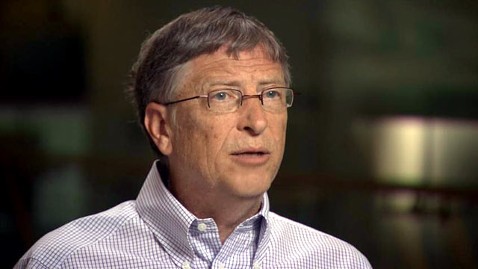
Credit: ABC
But he didn’t lose the title to Mexico’s telecom titan Carlos Slim; he gave it away. And as a result, the businessman-turned-philanthropist can point to a different kind of scoreboard.
“Well, it’s easiest to measure in the health work,” Gates told me, “where over 5 million lives have been saved.”
In a wide-ranging interview with Yahoo! and ABC News, the former head of Microsoft talked about how Steve Jobs’ death affected him, his fix for American schools and his annual letter, which sets the priorities for one of the most generous charitable efforts in history.
With a pledge to give away 95 percent of Gates’ personal wealth, the Gates Foundation claims to have granted more than $26 billion since 1994. While some of that money is devoted to improving U.S. education, roughly 75 percent goes to the poorest countries in the world, and Gates scoffs at the idea that the money would be better spent at home.
“Well, the question is, are human lives of equal value?” Gates said. ”For the mother whose child dies in Africa, is that somehow less important, less painful? If we can save that life — for very little [money], is that appropriate to do? And, in fact, we know that if we do save those lives, it can reduce the population growth. It can let them be on a path to graduate from receiving aid.”
After the Gates Foundation’s vaccination efforts in India, that nation reported only one case of polio last year. And while the foundation promises to fight on against preventable diseases, the top focus of this year’s letter is agriculture and Gates’ belief that without technology, farmers could never feed the world’s exploding population.
He calls for further research into the creation of flood-and-drought-resistant crops through genetic engineering.
“It is hard to overstate how valuable it is to have all the incredible tools that are used for human disease to study plants,” he writes. But the idea of genetically modified organisms, or GMOs, is loaded with controversy. Environmental groups worry that the practice could upset the food chain, leading to the spread of disease, “superweeds” and mutant insects.
To the dismay of GMO opponents, public records reveal that the Gates Foundation recently spent $27 million to buy 500,000 shares of Monsanto, the agribusiness giant with labs devoted to improving on nature to boost crop yields. And while Gates avoids the words “genetically modified” in his letter, he defends the idea when pressed.
“Over time, yes, countries will need to look at specific GMO products like they look at drugs today, where they don’t approve them all. They look hard at the safety and the testing. And they make sure that the benefits far outweigh any of the downsides.”
Aside from the environmental concerns, England’s Prince Charles was among those who blamed a rash of farmer suicides in India on the higher cost of GMO seeds. But Gates insisted that his foundation’s partners are not out to exploit developing nations.
“There’s absolutely no payments, no royalties of any kind. It’s just like in medicines. … We go to the big companies who don’t expect to make profits from the poorest billion and say: ‘Will you help us?’ And so they donate it.”
Back in America, Gates is renewing his push toward “peer-reviewed” teaching as the key to reforming education. Since the best — and worst — teachers often operate in a bubble, he suggests training an elite group to roam from class to class to share what works and what doesn’t.
“You take at least 2 percent of the teachers, train them very well and have them do structured visitations,” he said. “And they tell the teacher, ‘OK, you were good at this, but you didn’t engage these kids very well. You didn’t create discussion here. You didn’t explain why a kid would wanna know this thing,’ and help those teachers improve.”
And Gates also reflected on the passing of Steve Jobs. Weeks before the Apple founder died, Gates paid an unannounced visit to the home of his sometime friend and longtime rival.
“He and I always enjoyed talking. He would throw some things out, you know, some stimulating things. We’d talk about the other companies that have come along. We talked about our families and how lucky we’d both been in terms of the women we married. It was great relaxed conversation.
How did Jobs’ death affect him? ”Well, it’s very strange to have somebody who’s so vibrant and made such a huge difference and been … kind of a constant presence, to have him die,” Gates said. “It makes you feel like, ‘Wow, we’re getting old.’ I hope I still have quite a bit of time for the focus I have now, which is the philanthropic work. And there’s drugs we’re investing in now that won’t be out for 15 years — malaria eradication, I need a couple of decades here to fulfill that opportunity. But, you know, it reminds you that you gotta pick important stuff, because you only have a limited time.”
The Bill and Melinda Gates Foundation supported, in part, last year’s ABC NEWS initiative BE THE CHANGE: SAVE A LIFE , which focused on health care in some of the poorest areas of the world.
SHOWS: Good Morning America Nightline World News
painel da cultura brasileira
Música e celebração

- Tom Jobim e Vinicius de Moraes, em 1956, na época da estreia de Orfeu da Conceição (foto de José Medeiros/acervo IMS)
Na primeira vez que vi A música segundo Tom Jobim, o documentário de Dora Jobim (neta do homem) e Nelson Pereira dos Santos, embarquei de tal maneira no fluxo encantatório da música que não consegui prestar atenção à estrutura narrativa do filme, sua organização interna, suas estratégias de edição.
Foi preciso ver uma segunda vez, em DVD, parando de quando em quando para fazer anotações. Tudo isso para chegar a uma conclusão que já estava contida no letreiro final do filme, uma frase do próprio Tom Jobim: “A linguagem musical basta”. Ao que parece, foi esse o princípio que norteou os diretores desse documentário sem locução, sem entrevistas, sem textos explicativos.
Mas há inteligência e sensibilidade nessa colagem aparentemente “natural” de sons e imagens. Às vezes organizam-se em sequência várias interpretações de uma mesma canção, por cantores e músicos de diferentes países. Um exemplo: Tom cantando “Desafinado” ao violão, no Steve Allen Show, em 1964, é seguido por Ella Fitzgerald interpretando a mesma música em 1963, e por fim por Sammy Davis Jr., que leva ao extremo o scating vocal esboçado por Ella, reduzindo o canto a sílabas onomatopaicas.
Momentos epifânicos
Ou então “Garota de Ipanema”, o tema mais repetido no documentário, tocado e cantado em diversos idiomas até desembocar no antológico dueto entre Tom e Frank Sinatra em 1967, um dos momentos epifânicos do filme. (Há outros: Elis e Tom gravando “Águas de março”; Chico Buarque e Tom Jobim ouvindo as vaias a “Sabiá”, cantada por Cynara e Cybele no Festival Internacional da Canção de 1968; e sobretudo a sequência final, de que se falará mais abaixo.)
Mas essa ideia das várias versões de uma música não se converte jamais numa camisa de força, pois outros métodos de associação regem tanto a sucessão dos números musicais como a justaposição entre som e imagem enquanto dura cada um desses números (geralmente apresentados na íntegra).
Um exemplo: quando Agostinho dos Santos canta “A felicidade”, cuja letra fala do carnaval em contraste com as agruras do cotidiano, vemos imagens de bondes e trens superlotados no Rio dos anos 50. Outro: ao som da “Sinfonia de Brasília”, imagens fixas mostram Tom e Vinicius, Tom e Oscar Niemeyer, a capital em construção, a orquestra ensaiando, um rascunho da partitura etc.
Se nos casos citados a associação da música com seu referencial externo é direta, quase óbvia, há conexões mais sutis, como a bela passagem em que Nara Leão canta “Dindi” (com Menescal ao violão) entre discretas inserções de fotos de Tom Jobim andando de bote, pescando, caminhando na praia com o violão. De algum modo, isso tudo se harmoniza à perfeição.
Há, a meu ver, um elo um tanto frouxo nessa corrente. Já perto do final, a enfiada de canções (quase um pot-pourri) interpretadas pela Banda Nova, com Tom ao piano e suas backing vocals, em arranjos mais standard, soa redundante.
Mas isso é compensado amplamente por um último rasgo de gênio dos realizadores: a sequência do desfile da Mangueira em que Tom Jobim foi homenageado. Em vez do som festivo da escola de samba, o que ouvimos, salvo engano, é a grandiosa e melancólica “Saudade do Brasil”, uma composição sinfônica que atesta a dívida do compositor com seu mestre soberano Villa-Lobos.
O grande ausente
Em meio à plêiade de cantores e músicos excepcionais (de Erroll Garner a Milton Nascimento, de Dizzy Gillespie a Henri Salvador, de Sinatra a Judy Garland), o espectador esperto sentirá falta de um, talvez aquele que mais e melhor cantou Jobim: João Gilberto.
A explicação para essa ausência gritante, segundo consta, é que está sendo realizado um documentário sobre o cantor, e os produtores têm exclusividade sobre as imagens de suas performances. Mesmo assim, custava ceder umazinha para o filme de Dora Jobim e Nelson Pereira?
De todo modo, quase como numa brincadeira de “onde está Wally”, é possível ver João Gilberto na tela, logo no início do longa, acompanhando Elizeth Cardoso discretamente ao violão, numa cena do filme Pista de grama (1958), de Haroldo Costa. Só para registrar, aqui vai um breve fragmento, um pouco fora de sincronia:
Cabe uma última informação. A música segundo Tom Jobim é apenas metade de um díptico dedicado por Nelson Pereira dos Santos ao compositor. A outra metade, que trata da vida de Jobim, também está pronta, mas – absurdamente – ainda não encontrou distribuidor interessado.
E assim, como quem não quer nada, Nelson Pereira, que já documentou Gilberto Freyre e Sérgio Buarque de Holanda, além de ter adaptado Graciliano Ramos, Jorge Amado, Nelson Rodrigues e Guimarães Rosa, vai construindo seu gigantesco painel da cultura brasileira do século XX.
quarta-feira, 25 de janeiro de 2012
O Amor Que Não Ousa Dizer Seu Nome - Oscar Wilde

"O Amor, que não ousa dizer seu nome,"
Bateu-lhe à porta, ao acaso, um dia.
E ele, inebriado pela cotovia
(que paira à janela, mas depois some...),
...
Sentiu crescer, súbito, na alma, u'a fome
De algo que, até então, desconhecia.
Desejo... estranheza... culpa... agonia...!
Desce aos umbrais, na angústia que o consome!
...
... Porém, depois das lágrimas enxutas,
Chamou a cotovia, deu-lhe frutas,
E sorveram, um no outro, a própria essência.
...
E ambos, nessa atração de semelhantes,
Num cingir de músculos, os amantes
Ergueram-se aos portais da transcendência.
Oscar Wilde, 1876
(Tradução de Oliver Cvalcanti)
São Paulo de todos os sabores
Enviado por luisnassif, qua, 25/01/2012 - 18:38
Por diogojfaraujo
Anthony Bordain, famoso cozinheiro novaiorquino, tem um programa de TV onde visita todos os lugares do mundo, e veio aqui em SP. Ele teve a mesma impressão de praticament todos que aqui chegam pela primeira vez. Mas, vê que não é bem assim: a beleza de São Paulo oculta. Pq não está na arquitetura, no trânsito, nos rios... Ela está nas pessoas, na miscigenação, no convívio até que harmoniozo no meio desse inferno todo. É uma bela homenagem a SP e aos paulistanos este programa. Recomendo assisti-lo, certeza que todos vão gostar.


Te amo são paulo - Tom Jobim
Parabéns s duas forças que dão vida ao nosso Brasil, a cada um de nós e ao mundo!
terça-feira, 24 de janeiro de 2012
The state of our union
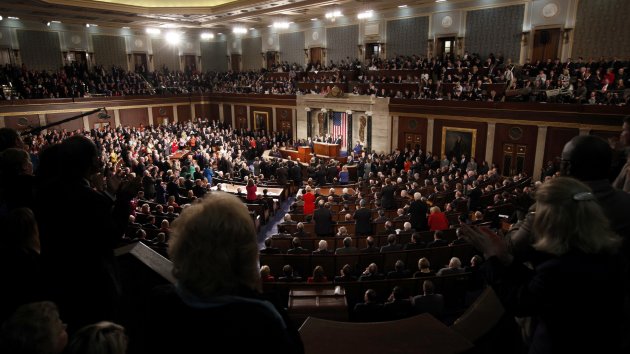
President Obama warned in his State of the Union address Tuesday that the nation's middle class is at risk because of growing economic inequality in the country and he argued the government must do more to preserve the basic American dream.
In a speech that is likely to set the theme of his 2012 re-election bid, Obama said "the basic American promise" that hard work can help you accomplish your dreams of owning a home and supporting a family are at risk if the government doesn't do more to balance the scale between the nation's rich and poor.
"The defining issue of our time is how to keep that promise alive. No challenge is more urgent. No debate is more important," Obama declared. "We can either settle for a country where a shrinking number of people do really well, while a growing number of Americans barely get by. Or we can restore an economy where everyone gets a fair shot, everyone does their fair share, and everyone plays by the same set of rules. What's at stake are not Democratic values or Republican values, but American values. We have to reclaim them."
In his third such address to the Congress, Obama's focus was not just on the future—as he laid out broad proposals to boost an "economy built to last, where hard work pays off and responsibility is rewarded."
But in a message that was unmistakably aimed at voters in the upcoming presidential election, Obama reminded his audience that the nation's economic troubles began long before he arrived at the White House, starting with the collapse of the nation's leading banks in 2008 due to lax regulation and "bad behavior."
"In the six months before I took office, we lost nearly four million jobs. And we lost another four million before our policies were in full effect," Obama said.
But he argued that the country is turning around under his policies, pointing to 3 million jobs created in the last 22 months. In asign that Obama will campaign against the Republican-led Congress as much as a his eventual GOP presidential rival, the president will take a hard stand against lawmakers determined to block his economic agenda.
"The state of our union is getting stronger, and we've come too far to turn back now," Obama insisted. "As long as I'm president, I will work with anyone in this chamber to build on this momentum. But I intend to fight obstruction with action, and I will oppose any effort to return to the very same policies that brought on this economic crisis in the first place."
The president argued he's laying out a "blueprint for an economy that's built to last" based on four main themes: American manufacturing, American energy, skills for American workers and "a renewal of American values."
Among other things, Obama called for a rollback for tax breaks for American companies that outsource jobs overseas and proposed new tax cuts for manufacturers that build their products stateside--a proposal that generated muted applause among Republican lawmakers in the House chamber. He also announced the creation of a "Trade Enforcement Unit" that would investigate unfair trade practices in counties including China--an issue that has been a big issue on the 2012 campaign trail.
"Our workers are the most productive on Earth, and if the playing field is level, I promise you--America will always win," Obama declared.
Tackling an issue that will be big in the general election, Obama called on Republicans to pass immigration reform, including the DREAM Act. "If election-year politics keeps Congress from acting on a comprehensive plan, let's at least agree to stop expelling responsible young people who want to staff our labs, start new businesses, and defend this country," Obama said. "Send me a law that gives them the chance to earn their citizenship. I will sign it right away."
Obama also called for aid to boost the nation's struggling housing market--proposing new tax incentives to help homeowners save $3,000 a year on their mortgages. He also announced the creation of a federal task force to monitor banks, mortgage lenders and credit card companies for fraud.
"Millions of Americans who work hard and play by the rules every day deserve a government and a financial system that do the same," Obama said. "It's time to apply the same rules from top to bottom: No bailouts, no handouts, and no copouts. An America built to last insists on responsibility from everybody."
Obama sounded familiar themes on energy--calling for a rollback of tax cuts on oil companies in favor of investments in clean energy sources. He announced a federal incentive to build clean energy projects on government land.
On education, he called on states to pass laws to mandate that all minors stay in school until they graduate or turn 18. He also called on Congress to enact measures to ensure student aid--but he also warned higher education to crack down on skyrocketing education costs.
"If you can't stop tuition from going up, the funding you get from taxpayers will go down," Obama said. "Higher education can't be a luxury--it's an economic imperative that every family in America should be able to afford."
He repeated a call for investment in the nation's crumbling infrastructure--announcing that he will sign an executive order to clear the "red tape" slowing federal construction projects. "But you need to fund these projects. Take the money we're no longer spending at war, use half of it to pay down our debt, and use the rest to do some nation-building right here at home," Obama said.
The White House has been signaling for weeks that Obama would embrace populist themes about the economy, as a way of drawing a line in the sand between him and his Republican rivals ahead of his 2012 re-election push. Like other presidents before him, he was joined in the House chamber by individuals aimed at personifying elements of his speech, including Debbie Bosanek, the secretary to billionaire financier Warren Buffett, whose argument that he shouldn't be paying a lower tax rate than average workers has become a rallying cry for the White House.
"We don't begrudge financial success in this country. We admire it," Obama insisted. "When Americans talk about folks like me paying my fair share of taxes, it's not because they envy the rich. It's because they understand that when I get tax breaks I don't need and the country can't afford, it either adds to the deficit, or somebody else has to make up the difference."
But the larger message of Obama's remarks was obvious, as the president at one point returned to one of the major themes of his 2008 presidential bid: Rising above cynicism and partisan gridlock to enact real change in Washington. He noted that the "greatest blow to confidence in our economy" came during last year's combative debt ceiling talks.
"Who benefited from that fiasco?" Obama asked. "I've talked tonight about the deficit of trust between Main Street and Wall Street. But the divide between this city and the rest of the country is at least as bad--and it seems to get worse every year."
He called for lawmakers to "lower the temperature" and "end the notion" that Democrats and Republicans must be locked in a "perpetual campaign of mutual destruction."
At the same time, he warned again that he wouldn't wait for Congress to enact major reforms in Washington. "With or without this Congress, I will keep taking actions that help the economy grow," Obama said. "But I can do a whole lot more with your help. Because when we act together, there is nothing the United States of America can't achieve."
http://news.yahoo.com/blogs/ticket/highlights-president-obama-2012-state-union-address-000338337.html
Assinar:
Postagens (Atom)